In this article
- What a commercial solar system actually is — from the building manager's perspective
- Feasibility check — what to examine before requesting a quote
- The regulatory side — grid connection and licensing
- Fire safety — the risk building managers aren't ready for
- Preventive maintenance — what to do and how often
- The impact on roof maintenance — what they don't tell you upfront
- A solar system in the ESG and green-building context
- Integration with the Building Management System (BMS)
- Bottom line — when it pays off, and how not to fail
- Frequently asked questions
An office building's roof is usually the most under-used space in the property: empty, exposed to the sun, and serving at most as a base for HVAC units and cooling towers. A photovoltaic (solar) system turns it into a productive asset — a source of energy, an ESG point, and an advantage with tenants. But there's another side few speak about honestly: a solar system is a live electrical installation on your roof, and it adds a real layer of liability, maintenance and risk that has to be managed day to day. In this article I'll explain both sides — what to check before deciding, what to do after installation, and exactly where building managers fail.
What a commercial solar system actually is — from the building manager's perspective
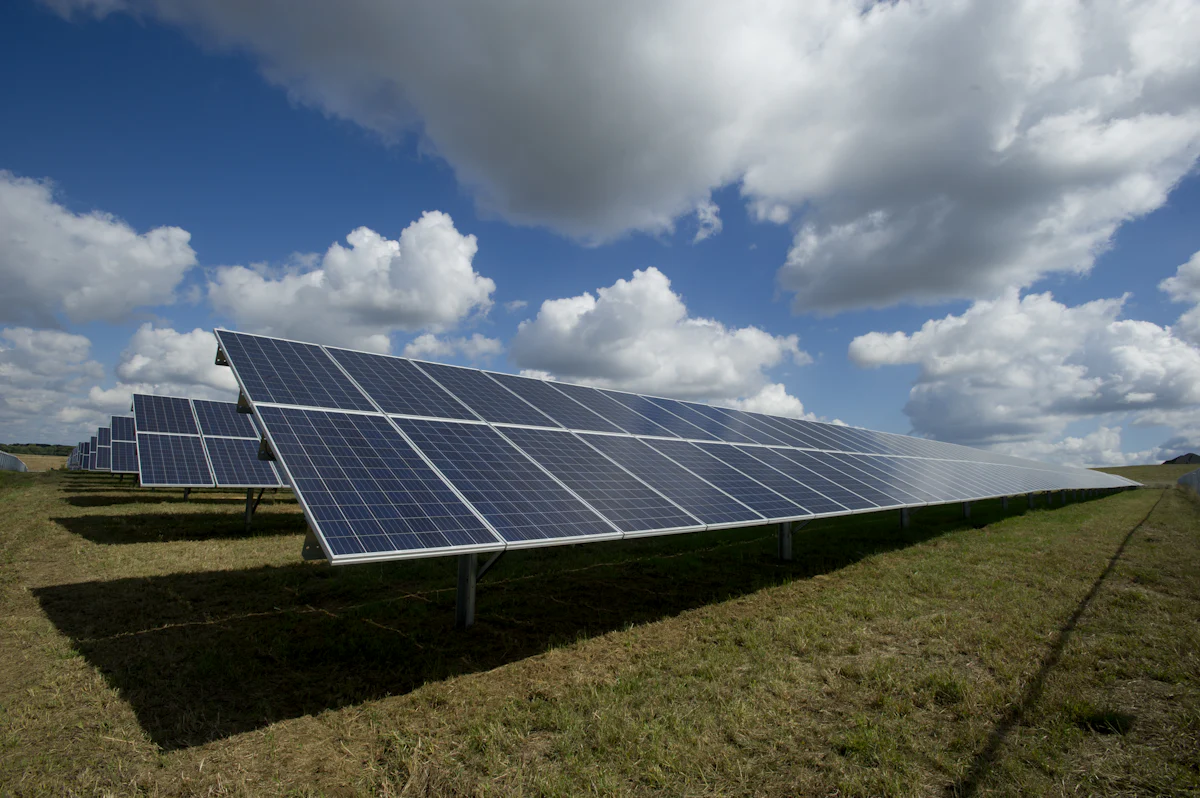
Engineering-wise, a commercial-scale photovoltaic system is made up of several components, all of which require maintenance and oversight: panels that convert light into direct current (DC), inverters that convert DC to alternating current (AC) suitable for the grid and the building, a supporting structure (rails and ballast weights or mechanical anchoring to the roof), high-voltage DC cabling, dedicated electrical panels, and a bidirectional meter with the electric utility. Some systems also add storage (batteries).
The central point for a building owner: this isn't a green gadget you install and forget. It's an electrical system in every respect, with dangerous voltages, sitting on the building's most sensitive element — the roof. As such, it enters the building's preventive maintenance plan directly, just like the main electrical panels or the fire-detection system. I've seen more than once buildings whose maintenance schedule was orderly — HVAC, electricity, plumbing — but the solar system was forgotten entirely. The discovery came when generation output dropped by 30% and no one noticed.
Feasibility check — what to examine before requesting a quote
The common mistake is to request a price quote from a solar contractor and sign. A real feasibility check starts with the structure itself, not the system. A solar contractor sells systems — they won't necessarily invest time in examining your roof's condition in depth. That's your job.
- The roof's load-bearing capacity: every panel and rail adds a constant load, and the wind load on a whole panel field is significant. An opinion from a structural engineer is required confirming the roof carries the system — including in extreme-wind scenarios. Old buildings not updated to the new wind regulations pose a real risk.
- The state of the waterproofing — the most critical point: it is absolutely prohibited to install a system on a roof whose waterproofing is at the end of its life. Faulty anchoring or stepping on worn waterproofing turns any future leak into a nightmare — because to repair the roof you have to dismantle part of the system. I've encountered buildings where the solar contractor installed, and a year later we found leaks that originated at the anchoring points. The cost of the partial dismantling and waterproofing repair ate into the return on investment.
- The age and condition of the main electrical panel: connecting a generation system to an old, overloaded panel may require a full upgrade of the building's electrical infrastructure — a cost not accounted for in the contractor's quote.
- Shading: cooling towers, HVAC units, neighboring buildings and chimneys create shading that reduces output. A poorly designed panel field loses considerable percentages just from partial shading on a single string.
- Access for maintenance: you need safe passages between panel rows, access to the inverters, and anchor points for work at height per the safety regulations. A roof you can't move around safely is a roof that won't be maintained.
Feasibility is determined first of all by the state of the structure. A building maintained per Israeli Standard (SI) 1525 for building maintenance, which knows exactly the state of its roof, waterproofing and electricity — arrives at the feasibility check with real data, not guesses.
The regulatory side — grid connection and licensing
A grid-connected solar system isn't something you install "under the radar." In Israel there is a clear regulatory framework that must be complied with:
- The Electricity Authority and the electric utility: connecting a generation system to the grid requires arrangement with the Electricity Authority and the electric utility, including obtaining in-principle approval, a connection approval, installing a bidirectional meter, and carrying out the installation in accordance with the relevant standards. Failing to arrange this isn't just a bureaucratic problem — it makes the system illegal and exposes the property owner to liability.
- A licensed electrician with the appropriate certification: designing, installing and connecting a photovoltaic system is electrical work in every respect, subject to the Electricity Law and the Electricity Regulations. The installation must be carried out by a holder of the appropriate license — not every certified electrician is qualified for DC work at this scale.
- Grounding, protections and Rapid Shutdown: a high-voltage DC system requires proper grounding, protection against short circuits and lightning, and accessible, marked disconnect switches — a subject that ties directly into the building's overall electrical-system maintenance.
It's important to understand: once the system is connected to the building, it becomes part of its electrical system in every respect. Anyone who touches electricity in the building — from an AC technician to a maintenance electrician — needs to know there is a DC voltage source on the roof that's live as long as there's daylight. I expanded on safety and documentation principles in electrical systems maintenance in an office building.
Fire safety — the risk building managers aren't ready for
This is the point I insist on most, because here the neglect is the most dangerous. A solar system adds a unique fire risk to the roof, for several reasons worth knowing:
- Electrical arcing (DC arcing): a loose DC connection, a faulty connector or a cable worn from friction against the support rail can produce an electrical arc — a concentrated heat source that may ignite. In DC voltage, an electrical arc is far harder to extinguish than in AC, because there's no natural "zero" in the wave.
- The system is "live" as long as there's light: unlike an ordinary AC circuit you disconnect with a switch, a solar panel generates voltage as long as it's exposed to light — including during a fire, and even when firefighters arrive. This completely changes the rules of engagement for firefighting forces and the risk of electrocution.
- Roof access for firefighters: a panel field makes safe movement on the roof and smoke-ventilation operations harder. If firefighters don't know in advance that there's a system and where the disconnect switches are — every second counts.
The practical conclusion: the very existence of the system must be documented in the building's site file and known to the local fire authority, with clear marking of the Rapid Shutdown switches and of safe access routes on the roof. A solar system the emergency forces don't know about is a double danger. This subject integrates directly into the principles I described in the Fire Safety Law and office buildings — a new system in a building requires a full update of the safety file, not just a technical installation.
Preventive maintenance — what to do and how often
A solar panel "with no moving parts" created a dangerous myth: that there's nothing to maintain. In fact, an unmaintained system loses significant output percentages within a few years, and accumulates silent failures that are discovered only when there's damage. Here is a realistic maintenance framework that reflects what works in practice:
Ongoing monitoring (monthly / quarterly)
- Output monitoring: comparing actual generation to expected, given the season and weather. A sharp, prolonged drop indicates a fault — a failed inverter, a disconnected string, heavy soiling or shading that wasn't there before.
- A quick visual check: cracked or especially dirty panels, vegetation growing and causing shading, and birds/rodents nesting under the panels and chewing cables — a problem increasingly seen in Israel.
- Inverter condition: fault lights, unusual noises, blocked ventilation from dust or objects.
Annual professional inspection
- Thermographic inspection: thermal imaging locates hot spots, loose connections and faulty cells before they become a fire hazard. This is the most important diagnostic tool in a solar system.
- Tightening connections: DC connectors, panel terminals and grounding — the most common failure points, especially after a winter with extreme temperature swings.
- Insulation and protection checks: verifying the protection systems, the Rapid Shutdown switches and the lightning arresters are sound and active.
- Thorough cleaning: dust, desert dust (hamsin), salt (near the sea) and organic soiling reduce output. In Israel this is especially relevant — buildings in the south and center near exposed areas accumulate dust far faster than expected.
- Checking the waterproofing around the anchoring points: these are the highest-risk areas for leaks, and must be checked every year.
All of these must enter a written maintenance plan and not stay in someone's head. I explained the principle in the annual preventive maintenance checklist — a solar system is another chapter in that plan, with its own frequencies and responsible parties.
The impact on roof maintenance — what they don't tell you upfront
A solar system doesn't just change the electricity bill — it changes the way the roof itself is maintained. A few practical implications worth internalizing before deciding:
- Roof maintenance becomes more complex: cleaning gutters, renewing waterproofing or dealing with a leak — jobs that used to be simple and quick — now require coordination with the system and sometimes partial dismantling. A two-hour job becomes a full-day project with three suppliers.
- Access to existing equipment on the roof: the HVAC units, cooling towers and any other equipment already on the roof need to stay accessible for ongoing maintenance. The panel layout must account for this at the design stage — not after installation.
- Drainage and water load: a panel field changes the drainage patterns and the flow of rainwater on the roof. Under the panel rows, soiling accumulates faster, and standing-water areas that weren't there before can form.
- Liability gaps between suppliers: suddenly there's another party on the roof. Without a managing party who coordinates between the solar contractor, the roof waterproofer and the HVAC technician — each one points at the other when there's a fault. I've seen cases where a liability dispute between suppliers dragged on for months while a leak grew.
This is exactly why a solar system succeeds in professionally managed buildings, and fails in buildings where "everyone does their own thing." When there's one party who holds the digital building file, the maintenance schedule and the coordination between suppliers — the system stays an asset. I described this approach in comprehensive property management.
A solar system in the ESG and green-building context
Beyond the electricity savings, a solar system is a significant component in the building's sustainability profile. Renewable energy generation contributes to compliance with Israeli Standard (SI) 5281 (green building), and strengthens the building's position with corporate tenants who have internal ESG targets — a trend intensifying across the market. An office building with renewable energy generation is more attractive in a market where sustainability considerations are becoming a real factor in leasing decisions.
But — and this is an important caveat — the ESG value exists only if the system actually works and is maintained. A neglected system generating half of its original output is an empty sustainability statement, and corporate tenants sophisticated on the subject will ask questions. I expanded on building a credible ESG profile in ESG in office buildings in Israel — solar is an excellent layer provided it's managed like any other system.
Integration with the Building Management System (BMS)
In an advanced building, the solar system's data doesn't stay in the inverter supplier's separate app. It's integrated into the Building Management System (BMS), so that generation output, building consumption and fault alerts are monitored in one place together with HVAC, lighting and the electrical systems. This makes it possible to immediately identify a failed inverter or an unusual output drop — instead of discovering it months later on the electricity bill.
This integration is also what makes the investment measurable: without monitoring, you can't know whether the system is meeting its output target, and you can't know when it starts to deteriorate. Monitoring isn't a luxury — it's an integral part of the maintenance. I explained this logic in the Building Management Systems (BMS) guide.
Bottom line — when it pays off, and how not to fail
A rooftop solar system on an office building can be one of the best investments in the property — a source of income, an ESG advantage, and optimal use of dead space. It pays off only when you treat it as it really is: a live electrical installation on the roof, that requires a serious engineering feasibility check, full regulatory arrangement, documentation in the safety file, and preventive maintenance throughout its life.
The pattern I see again and again: a building installs, the first year everything works great, and then — gutter cleaning is deferred because "it has to be coordinated with the solar," connection checks aren't done because "there's no one responsible," and output drops quietly. The logic of "install and forget until something burns" is exactly what turns an excellent asset into a risk and a financial disappointment.
Frequently asked questions
Does a commercial rooftop solar system really require no maintenance?
That's a dangerous myth. It's true there are no moving parts, but panels get dirty and lose output, DC connections loosen over time, inverters fail, and hot spots develop silently. An unmaintained system loses significant output percentages within a few years, and accumulates fire risks that aren't felt until there's damage. Preventive maintenance is required, with ongoing monitoring and an annual thermographic inspection.
What is the real fire risk from a solar system?
The main risk is electrical arcing (DC arcing) from a loose connection, a faulty connector or a worn cable — a concentrated heat source that may ignite. In addition, a panel generates DC voltage as long as there's light, including during a fire, which endangers firefighters and complicates extinguishing. That's why it's essential to document the system in the site file, clearly mark the Rapid Shutdown switches, and perform an annual connection check.
Who is qualified to install and maintain a solar system in Israel?
Installing and connecting a photovoltaic system is electrical work in every respect, subject to the Electricity Law and the Electricity Regulations in Israel. The installation must be carried out by an electrician holding the license appropriate for the type of work. Connecting to the grid requires arrangement with the Electricity Authority and the electric utility, including a connection approval and a bidirectional meter. Annual maintenance, including a thermographic inspection, is also performed by a certified professional.
How does a solar system affect roof maintenance?
It complicates it. Cleaning gutters, renewing waterproofing or handling a leak now require coordination with the system and sometimes partial dismantling — a job that used to be simple becomes a project with several suppliers. That's why it's essential to make sure the waterproofing is in excellent condition before installation, to keep access routes clear to all existing roof equipment, and to appoint a managing party who coordinates between the solar contractor, the roof waterproofer and the HVAC technician.
What should you check before installing a solar system on a building's roof?
There are four critical areas: the roof's load-bearing capacity (requires a structural engineer's opinion), the state of the waterproofing (you must not install on waterproofing at the end of its life), the age and condition of the main electrical panel, and an analysis of shading from existing equipment and neighboring buildings. The feasibility check must focus on the structure itself — not just on choosing the system.
Does a solar system contribute to an ESG rating and green building in Israel?
Yes — renewable energy generation contributes to compliance with Israeli Standard (SI) 5281 (green building) and strengthens the building's ESG profile with corporate tenants. But this value exists only if the system functions and is properly maintained. A neglected system generating half its output is not a credible sustainability statement — sophisticated corporate tenants will know to ask questions.