In this article
- How the System Works
- Why It Is Needed + Risks of Neglect
- The Maintenance Regime — What, How Often, and How
- Who Is Licensed to Maintain and Certify
- Standards and Regulation
- Documentation and Forms
- Common Faults and Warning Signs
- The Value of Professional Maintenance Management / How Domera Helps
- Frequently Asked Questions
- Further Reading
- Frequently asked questions
Lifting Machines / Work Platform — Maintenance, Inspection Report and Licensed Inspector
Lifting machines and work platforms are equipment that lifts people or loads to height — cranes, industrial service lifts, mobile work platforms ("scissor"/boom) and fixed lifting installations in plant rooms and on the roof. Every lifting machine or work platform requires a periodic inspection by a lifting-machines licensed inspector who issues an inspection report, and this is a legal requirement: without a valid inspection report — the equipment may not be operated.
For a building manager or maintenance engineer this is one of the less familiar but most binding requirements, because it bears directly on the safety of human life. This article explains how this equipment works, why neglecting it is dangerous, what the required maintenance regime is in Israel, who is licensed to inspect and certify, and how to manage the inspection-report cycle without falling into a validity gap.
Part of a bigger picture: lifting machines are one component within a complete preventive-maintenance program. For the full framework — all the systems, frequencies, licensed parties and documents — see the complete PPM guide.
How the System Works
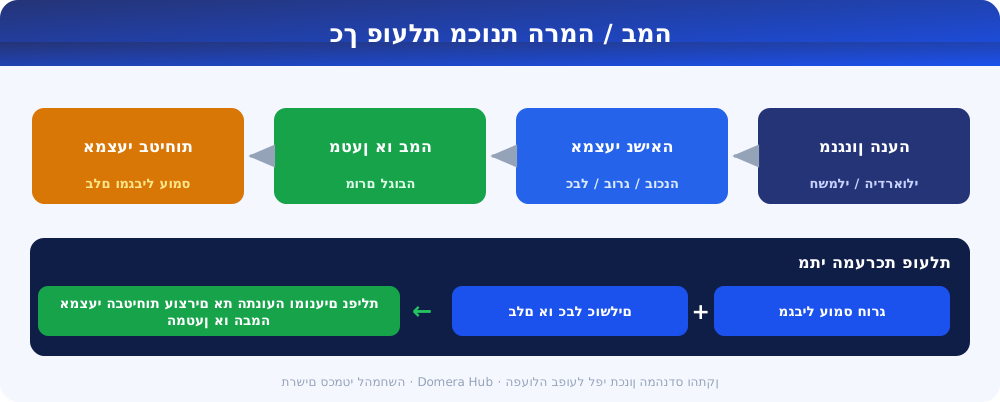
"Lifting machine" and "work platform" are broad categories that group together equipment of different kinds, but they all share the same principle: a drive mechanism (electric, hydraulic or mechanical) that drives a bearing means (rope, chain, endless screw or hydraulic cylinder) that raises a load or platform to height, accompanied by safety means that are meant to arrest a fall or alert to a fault.
Typical examples in a building:
- Mobile work platform (Aerial Work Platform) — a "scissor" platform or an articulated boom that raises a worker to height for maintenance, cleaning or installation.
- Crane / lifting installation — a fixed or mobile load crane that lifts loads, for example in a machine room, on the roof or in a warehouse.
- Service lifts and industrial lifting installations — lifting equipment that is not an ordinary passenger elevator (which has its own separate inspection regime).
In each of them, the safety chain is the heart of the system: brakes that lock the movement in the absence of activation, an overload limiter that prevents overloading, limit switches that restrict the range of movement, and backup means (an emergency brake, a speed-control valve) that are meant to catch in the event of a failure in the drive component. The role of the licensed inspector's report is to verify that this entire safety chain is intact and functioning — not just that the machine "lifts."
Lifting machines belong to the building's lifting-equipment family, alongside lifting accessories (slings, shackles and ropes) that actually carry the load. It is important to distinguish: the machine itself and its lifting accessories are inspected as separate components — the machine inspection does not automatically cover the wear of the slings and ropes.
Why It Is Needed + Risks of Neglect
The need for maintenance here is not "operational convenience" but the safety of human life. A failure in a lifting machine or a work platform translates directly into a fall from height, crushing or load collapse — among the most fatal accidents in maintenance work. A worn brake, a rope that has frayed, an uncalibrated overload limiter or a platform with hidden corrosion may function correctly hundreds of times — and then fail once, under load.
Neglect entails a clear chain of risks:
- Safety — a fall, crushing, injury to a worker or a passer-by; in severe cases, criminal liability of the holder and the operator.
- Law — operating a lifting machine without a valid inspection report is a breach of occupational-safety law; a labor inspector may issue a stop order.
- Insurance — in the event of an incident, a policy may not cover equipment operated without a valid inspection report.
- Operational continuity — a validity gap in the inspection report puts the machine out of use until a re-inspection, and sometimes shuts down entire maintenance works in the building.
The Maintenance Regime — What, How Often, and How
The main binding requirement is simple and clear in the PPM matrix:
- Lifting machines — inspection report every 14 months. The inspection is performed by a lifting-machines licensed inspector, and the document to keep is an inspection report. This is a legal (statutory) requirement.
- Work platform — inspection report every 14 months. The same frequency, the same licensed party (a lifting-machines licensed inspector) and the same document (an inspection report). This too is a legal requirement.
Note the "non-round" frequency: 14 months, not 12. This is a common stumbling point — a maintenance manager who assumes an "annual inspection" may schedule too early (a waste) or, worse, think there is still time and discover that the report has already expired. Always derive the next inspection date from the previous report date + 14 months, not from "the same month next year."
Beyond the periodic report, the holder is also responsible for ongoing maintenance between inspections: lubrication, daily/weekly integrity checks by the operator before use, and immediate treatment of any deficiency found. An inspection report is not a substitute for maintenance — it is a periodic certification point that assumes the equipment was properly maintained in between.
Who Is Licensed to Maintain and Certify
The key point: the inspection report can be issued only by a lifting-machines licensed inspector — a holder of a dedicated qualification from the authorized body for the field of lifting equipment. This is not the manufacturer's service technician and not a general electrician; it is a qualification separate and defined in law, exactly as a licensed inspector is required for elevators, air receivers and steam boilers — each field and its licensed inspector.
In practice, two complementary roles meet here, and it is important not to confuse them:
- Service company / manufacturer's technician — performs the ongoing maintenance, lubrication and repairs. Its role is to keep the equipment sound.
- Lifting-machines licensed inspector — the external, independent party that inspects and certifies the equipment and issues the inspection report. Its role is to certify soundness against the law.
Operating an operator (for example of a mobile work platform) may also require certification/training of the operator themselves — but this is a layer separate from the machine's inspection report, and depends on the type of equipment.
Standards and Regulation
Inspection of lifting machines and work platforms is a legal (statutory) requirement applying to every site where such equipment exists. The regulatory framework for lifting-equipment inspections in Israel is anchored in the Safety at Work Ordinance and the regulations under it, which define the obligation of a periodic inspection by a licensed inspector and the prohibition on operating equipment without a valid inspection report.
In our requirements matrix there is no unique Israeli-standard (SI) number or fire-service form referenced explicitly for lifting machines — the frequency (14 months), the licensed party (a lifting-machines licensed inspector) and the document (an inspection report) are the binding requirement. For any specific design or interpretive question — one should act per the current standard and authority/manufacturer guidance and per the licensed inspector's guidance, without relying on a standard number that was not defined here.
Documentation and Forms
The single document that holds the equipment's compliance is the inspection report of the licensed inspector. It must include the machine's identification details, the inspection results, deficiencies if found, and validity until the next inspection (14 months).
Alongside the report, keep as supporting documentation the ongoing maintenance reports of the service company and the register of deficiencies and their treatment. In the event of an accident or a labor-inspector audit — a valid inspection report is the first proof that the equipment was operated lawfully. There is no dedicated fire-service form to link here, unlike other systems in the building; the governing document is the report itself.
Common Faults and Warning Signs
- An expired / "forgotten" report — 14 months not 12: the most common documentation fault. Scheduling by "the same month of the year" creates a validity gap and continues to operate equipment unlawfully.
- Wear in the rope / lifting sling: broken wires, abrasion or deformation in the bearing rope — one of the direct causes of load collapse.
- A weak or slow-responding brake: a platform that "sinks" on stopping or non-smooth movement indicates a worn brake — an immediate warning sign.
- An uncalibrated / disabled overload limiter: loading beyond the bearing capacity without an alert — a direct path to structural failure.
- Abnormal noise, vibration or hydraulic leak: a change in the drive sound or an oil puddle under the machine requires a stop and inspection before further use.
- Corrosion in the bearing structure: rust in the boom, the platform or the anchoring points impairs the structural strength and is sometimes hidden from the eye.
The Value of Professional Maintenance Management / How Domera Helps
Lifting machines are a clear example of a requirement that is easy to "miss" on an ordinary calendar: a 14-month cycle, a unique licensed party, and a single document without which, valid, the equipment may not be operated at all. Domera's Knowledge Hub is designed to help the building manager see these requirements clearly and not rely on memory.
In practice, in Domera every lifting machine and work platform is managed through a preventive-maintenance program (PPM): for each item of equipment a single open instance is opened at any given moment, and closing it requires attaching the certifying inspection report. The system computes the next inspection date from the exact 14-month cycle (not "annual"), sends a reminder before the report expires, and produces compliance reports that show which machines are valid and which are overdue. The idea is simple: close the loop against the document, and don't let a validity gap turn into equipment operated unlawfully.
Frequently Asked Questions
How often is an inspection report required for a lifting machine or work platform?
Once every 14 months. Note that this is not an "annual" inspection — the next inspection date must be derived from the previous report date plus 14 months, and not from the same month in the following year.
Who is licensed to inspect and certify a lifting machine?
Only a lifting-machines licensed inspector — a holder of a qualification dedicated to the field of lifting equipment. This is not the manufacturer's service technician and not a general electrician, but an independent party that issues the inspection report.
What is the difference between the licensed inspector's report and the service company's maintenance?
The service company performs lubrication, ongoing servicing and repairs and keeps the equipment sound. The licensed inspector is the external party that inspects and certifies the soundness and issues the report. The two roles are complementary and do not replace one another.
What happens if a lifting machine is operated without a valid inspection report?
This is a breach of occupational-safety law. A labor inspector may issue an order to stop use, in the event of an accident personal and criminal liability may apply, and insurance coverage may be voided. In short: without a valid inspection report — it may not be operated.
Which legal framework applies to lifting-equipment inspections in Israel?
The framework is anchored in the Safety at Work Ordinance and the regulations under it, which require a periodic inspection by a licensed inspector. For specific design details one should act per the current standard and authority/manufacturer guidance and per the licensed inspector's guidance.
Does the machine inspection also cover the lifting accessories?
No. Lifting accessories — slings, shackles and ropes — are inspected as a separate component with an inspection regime of its own. Do not assume that the machine's inspection report covers the wear of the accessories.
How does Domera help manage the inspection-report cycle?
Through a preventive-maintenance program (PPM): a single open instance per machine, closure against the inspection report, an exact computation of the 14-month cycle, a reminder before expiry, and compliance reports that show exactly which machines are valid and which are overdue.
Further Reading
- The PPM guide — how to build a complete preventive-maintenance program for a building, including all lifting equipment.
- Lifting accessories (slings, shackles, ropes) — the components that actually carry the load and are inspected separately from the machine.
- Occupational-safety law in the building — the legal framework under which a licensed-inspector report is required for lifting equipment.
- The Knowledge Hub — all the guides on building systems in one place.
Frequently asked questions
How often is an inspection report required for a lifting machine or work platform?
Once every 14 months. Note that this is not an "annual" inspection — the next inspection date must be derived from the previous report date plus 14 months, and not from the same month in the following year.
Who is licensed to inspect and certify a lifting machine?
Only a lifting-machines licensed inspector — a holder of a qualification dedicated to the field of lifting equipment. This is not the manufacturer's service technician and not a general electrician, but an independent party that issues the inspection report.
What is the difference between the licensed inspector's report and the service company's maintenance?
The service company performs lubrication, ongoing servicing and repairs and keeps the equipment sound. The licensed inspector is the external party that inspects and certifies the soundness and issues the report. The two roles are complementary and do not replace one another.
What happens if a lifting machine is operated without a valid inspection report?
This is a breach of occupational-safety law. A labor inspector may issue an order to stop use, in the event of an accident personal and criminal liability may apply, and insurance coverage may be voided. In short: without a valid inspection report — it may not be operated.
Which legal framework applies to lifting-equipment inspections in Israel?
The framework is anchored in the Safety at Work Ordinance and the regulations under it, which require a periodic inspection by a licensed inspector. For specific design details one should act per the current standard and authority/manufacturer guidance and per the licensed inspector's guidance.
Does the machine inspection also cover the lifting accessories?
No. Lifting accessories — slings, shackles and ropes — are inspected as a separate component with an inspection regime of its own. Do not assume that the machine's inspection report covers the wear of the accessories.
How does Domera help manage the inspection-report cycle?
Through a preventive-maintenance program (PPM): a single open instance per machine, closure against the inspection report, an exact computation of the 14-month cycle, a reminder before expiry, and compliance reports that show exactly which machines are valid and which are overdue.