
In this article
- How the system works
- Why the system is necessary + risks of neglect
- The maintenance regime — what, how often, and how
- Who is qualified to maintain and certify
- Standards and regulation
- Required documentation and forms
- Common faults and warning signs
- The value of professional maintenance management / how Domera helps
- Frequently asked questions
- Further reading
- Frequently asked questions
Potable-Water Tank — Disinfection and Sampling
A potable-water tank is the vessel (a water pool or storage tank) in which the building stores drinking water from the city network before distributing it to the apartments and consumers — usually in order to ensure stable pressure, a reserve in times of shortage, and feed for the pressure-boosting pumps. Because the water stands in the tank before it is consumed, the tank is a quiet point of risk for microbial contamination and a decline in water quality — and so its periodic disinfection and the testing of the water quality (sampling) are an annual legal requirement under the supervision of the Ministry of Health.
Part of a bigger picture: this system is one component within a complete preventive maintenance program. For the full framework — all the systems, frequencies, qualified parties and forms — see the complete PPM guide.
For a building manager or maintenance engineer, the tank is an "out of sight" system: a closed vessel in a technical room, on the roof or in the basement, that usually no one enters — until a taste, a smell, or an abnormal sampling result is discovered. But precisely because the water in it stands, sediment, biofilm and bacteria can accumulate in it quietly. In this article we explain how the system works, why annual disinfection and sampling are critical, what the maintenance regime required in Israel is, who is qualified to perform and certify, and how to manage this without falling into the corner.
Part of a bigger picture: the disinfection and sampling of the tank are two components within a complete preventive maintenance program. For the full framework — all the systems, frequencies, qualified parties and documents — see the complete PPM guide.
How the system works
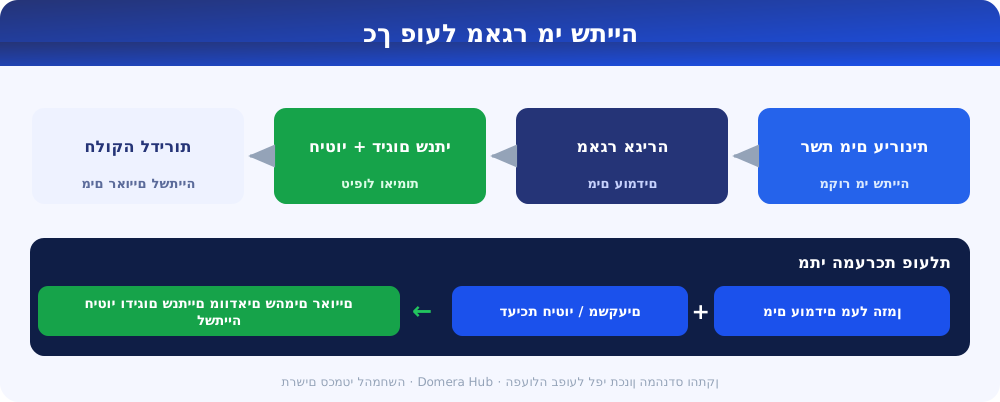
In principle, the drinking water arrives from the city network and enters the tank through a filling valve (usually with a float or level control). From the tank, the water exits to the building's distribution system — usually through pressure-boosting pumps that push it to the floors. Between the city network and the tank, and sometimes at its outlet, water-quality protection measures are installed, foremost among them the backflow preventer that prevents water that has already "touched" the building from flowing back and contaminating the city network.
The reason the tank requires dedicated treatment is stagnation: as long as water flows and is replaced, its quality is preserved. But in a storage tank the water dwells for a while, and then three processes may harm it. First, sediment settling — sand, rust and debris settle to the bottom and create a substrate. Second, biofilm — a thin biological layer that clings to the walls and harbors bacteria. Third, decay of disinfection — the concentration of the residual chlorine that arrived from the city network drops over time, and so the protection against bacteria weakens. At certain temperatures and in standing water, the risk of bacterial proliferation also rises, including the legionella family in accompanying hot-water systems.
Therefore the system is maintained in two complementary steps: disinfection — cleaning the tank and disinfecting it to remove sediment, biofilm and contamination; and sampling — taking a water sample and testing it in a laboratory to verify that the water is indeed fit for drinking. The first treats, the second verifies — and both are required.
Why the system is necessary + risks of neglect
The value of disinfecting and sampling the tank is protecting the residents' health. A neglected tank can turn the building's drinking water from a safe source into a source of risk — without this being visible to the eye, since contaminated water is not always turbid or off-tasting. A drinking-water contamination event can affect all the building's residents at once.
The risks of neglecting the tank accumulate on several levels:
- Health — sediment, biofilm and bacteria in standing water may cause intestinal illnesses and infections; water without sufficient residual disinfection is exposed to bacterial proliferation.
- Legal and regulatory — disinfecting the tank and sampling the water are statutory requirements under the supervision of the Ministry of Health. The absence of a valid disinfection certificate or a proper sampling report = non-compliance before the authority.
- Operational — the accumulation of sediment harms the pumps and the quality of the distributed water, and shortens equipment life.
- Personal liability — in the event of a contamination incident, the building manager and the residents' committee may bear liability if it turns out that the annual disinfection or sampling was not carried out.
The maintenance regime — what, how often, and how
A potable-water tank has two fixed maintenance steps, both annual and statutory, applying to every site:
- Tank disinfection — annual (every 12 months). Physical cleaning of the tank (draining, rinsing and removal of sediment and biofilm) and its disinfection, usually in a chlorine solution at a concentration and for a duration determined per the guidelines. After the disinfection the tank is rinsed and refilled. The document to keep: a cleaning and disinfection certificate, signed by the performing party.
- Potable-water sampling (tank) — annual (every 12 months). Taking a water sample from the tank and testing it in an accredited laboratory for microbial and chemical parameters (in accordance with the drinking-water regulations), to verify that the water is fit. The document to keep: an analysis report from an accredited laboratory.
The two steps complement and do not replace each other: the disinfection treats the tank, and the sampling verifies that the result is indeed sound. Beyond both, it is recommended that the maintenance manager include the tank in an ongoing visual inspection round — to verify that the cover is sealed, that there is no rainwater ingress, dirt or pests, and that access to the tank is clear. But the formal disinfection and the sampling can be performed only by qualified parties, and they cannot be replaced by self-inspection.
Who is qualified to maintain and certify
Each of the two steps has a dedicated qualified party:
- Tank disinfection is performed and certified only by a water-systems disinfector licensed by the Ministry of Health — a professional trained and licensed for the disinfection of drinking-water systems. This is the one who issues the cleaning and disinfection certificate.
- Water sampling is performed and tested in an accredited laboratory (accredited by the Israel Laboratory Accreditation Authority), which is the one that issues the analysis report. A reliable water test requires an accredited laboratory — not every "private" test counts as meeting the requirement.
Do not approve disinfection performed by a party that is not a licensed disinfector on behalf of the Ministry of Health, or sampling tested in a laboratory that is not accredited — they will not count as meeting the legal requirements.
Standards and regulation
Disinfecting the potable-water tank and sampling the water are legal (statutory) requirements applying to every site, and their frequency — once a year each. The supervising regulatory party is the Ministry of Health, responsible for drinking-water quality in Israel; the disinfection, the sampling, the method of performance and the parameters tested are subject to the drinking-water regulations and the current guidelines of the Ministry of Health.
An important clarification: in our requirements matrix the disinfection is defined as annual, statutory, by a disinfector licensed on behalf of the Ministry of Health, with a cleaning and disinfection certificate as the mandatory document; and the sampling is annual, statutory, by an accredited laboratory, with an analysis report — but it does not contain an SI number or a specific clause directed directly at the tank. Therefore we do not cite a specific standard number here, and we refer generally to the drinking-water regulations and the Ministry of Health's guidelines. The exact parameters and method will be determined by the qualified party in accordance with the current guidelines.
Required documentation and forms
The two documents that uphold the tank's compliance are the cleaning and disinfection certificate (from the annual disinfection, signed by the licensed disinfector) and the analysis report from an accredited laboratory (from the annual sampling). Manage both as live files with a date, since both are renewed each year.
A potable-water tank has no dedicated fire-service form (unlike fire-suppression systems, many of which have a uniform form of the National Fire and Rescue Authority) — the mandatory documentation is the disinfection certificate and the sampling report. From the standpoint of a Ministry of Health inspector or an investigator in the event of a contamination incident, these two valid documents are the proof that the tank was treated and that the water was tested and found sound.
Common faults and warning signs
- A change in the taste, smell or color of the water — a clear sign of a decline in quality (sediment, biofilm, disinfection decay); requires testing and sometimes immediate disinfection.
- An unsealed or damaged tank cover — opens an entry for rainwater, dirt, dust, insects or rodents into the drinking water.
- Accumulation of sediment at the bottom — harms water quality and the pumps; discovered during disinfection or internal inspection.
- An abnormal sampling result — an analysis report that is not sound requires immediate treatment (repeat disinfection, repeat sampling, and in severe cases cessation of use until repaired).
- Light penetration into the tank — may encourage algae growth; the tank should be sealed against light.
- "An expired or missing document" — the common documentary fault: the tank exists and may even be sound, but there is no valid disinfection certificate or sampling report — and from the standpoint of the law this is non-compliance.
The value of professional maintenance management / how Domera helps
The potable-water tank is a clear example of an "out of sight" component that is easy to forget: two annual steps, two different qualified parties, and two dated documents — and every miss leaves the building non-compliant and the residents exposed to contamination invisible to the eye. Domera's Knowledge Hub is designed to help the building manager see these components before they become a problem.
In practice, in the Domera system the tank disinfection and the sampling are managed through a preventive maintenance program (PPM): for each task one open instance is opened at any given moment, and its closure requires attaching the certifying document — the cleaning and disinfection certificate or the analysis report. The system sends a reminder before expiry so that the annual disinfection and sampling are renewed on time, and produces compliance reports that show exactly whether both documents are valid. The idea is simple: not to rely on memory, but on a system that closes the loop against the document.
Frequently asked questions
What is a potable-water tank and why is it important?
A potable-water tank is a storage vessel in which the building stores drinking water from the city network before distributing it to the apartments — usually to ensure stable pressure and a reserve. It is important because the water in it stands, and so it is a point of contamination risk; its annual disinfection and sampling protect the health of all the building's residents.
How often must a potable-water tank be disinfected?
Tank disinfection is an annual legal requirement — once every 12 months — and is performed by a water-systems disinfector licensed on behalf of the Ministry of Health. At its conclusion a cleaning and disinfection certificate is issued that must be kept valid.
What is the difference between tank disinfection and potable-water sampling?
Disinfection is the treatment itself — cleaning the tank and removing sediment and biofilm and disinfecting it. Sampling is the test — taking a water sample and testing it in an accredited laboratory to verify that the water is fit for drinking. The disinfection treats, the sampling verifies; both are annual and both are required.
Who is qualified to disinfect a tank and sample the water?
The disinfection is performed and certified by a water-systems disinfector licensed by the Ministry of Health, who issues a cleaning and disinfection certificate. The sampling is tested by an accredited laboratory (accredited by the Israel Laboratory Accreditation Authority), which issues an analysis report. Both parties are specifically qualified — not every professional is permitted to certify.
Which documents must be kept for the tank?
Two valid documents: the cleaning and disinfection certificate from the annual disinfection, and the analysis report from an accredited laboratory from the annual sampling. Both are renewed each year, and both are the proof of compliance before the Ministry of Health.
What happens if the tank is not disinfected or not sampled?
The absence of a valid disinfection certificate or sampling report means non-compliance before the Ministry of Health. Beyond the law — an undisinfected tank and water that was not tested may contain sediment, biofilm and bacteria without anyone knowing, and endanger the health of all the residents.
What is the connection between the tank, the backflow preventer and legionella?
The backflow preventer protects the city network from contamination originating in the building, including from the tank. Legionella is a bacterium that proliferates in standing water and in hot-water systems — and so standing water in the tank and in the distribution network is a risk factor that regular disinfection and sampling come to reduce.
How does Domera help manage tank disinfection and sampling?
Through a preventive maintenance program (PPM): one open instance per task, closure against the certifying document (a disinfection certificate or an analysis report), a reminder before expiry to renew on time, and compliance reports that show exactly whether both documents are valid.
Further reading
- The PPM guide — how to build a complete preventive maintenance program for the building, covering all the systems and documents.
- Backflow preventer, legionella and water tank — the biological contamination risks in water systems and the measures for protecting them.
- Water and plumbing systems maintenance — the broad picture of the water supply, the piping and the pressure-boosting pumps in the building.
- Water saving and conservation in the building — managing water consumption, detecting leaks and improving efficiency alongside a safe water supply.
- Knowledge Hub — all the guides on the building's systems in one place.
Frequently asked questions
What is a potable-water tank and why is it important?
A potable-water tank is a storage vessel in which the building stores drinking water from the city network before distributing it to the apartments — usually to ensure stable pressure and a reserve. It is important because the water in it stands, and so it is a point of contamination risk; its annual disinfection and sampling protect the health of all the building's residents.
How often must a potable-water tank be disinfected?
Tank disinfection is an annual legal requirement — once every 12 months — and is performed by a water-systems disinfector licensed on behalf of the Ministry of Health. At its conclusion a cleaning and disinfection certificate is issued that must be kept valid.
What is the difference between tank disinfection and potable-water sampling?
Disinfection is the treatment itself — cleaning the tank and removing sediment and biofilm and disinfecting it. Sampling is the test — taking a water sample and testing it in an accredited laboratory to verify that the water is fit for drinking. The disinfection treats, the sampling verifies; both are annual and both are required.
Who is qualified to disinfect a tank and sample the water?
The disinfection is performed and certified by a water-systems disinfector licensed by the Ministry of Health, who issues a cleaning and disinfection certificate. The sampling is tested by an accredited laboratory (accredited by the Israel Laboratory Accreditation Authority), which issues an analysis report. Both parties are specifically qualified — not every professional is permitted to certify.
Which documents must be kept for the tank?
Two valid documents: the cleaning and disinfection certificate from the annual disinfection, and the analysis report from an accredited laboratory from the annual sampling. Both are renewed each year, and both are the proof of compliance before the Ministry of Health.
What happens if the tank is not disinfected or not sampled?
The absence of a valid disinfection certificate or sampling report means non-compliance before the Ministry of Health. Beyond the law — an undisinfected tank and water that was not tested may contain sediment, biofilm and bacteria without anyone knowing, and endanger the health of all the residents.
What is the connection between the tank, the backflow preventer and legionella?
The backflow preventer protects the city network from contamination originating in the building, including from the tank. Legionella is a bacterium that proliferates in standing water and in hot-water systems — and so standing water in the tank and in the distribution network is a risk factor that regular disinfection and sampling come to reduce.
How does Domera help manage tank disinfection and sampling?
Through a preventive maintenance program (PPM): one open instance per task, closure against the certifying document (a disinfection certificate or an analysis report), a reminder before expiry to renew on time, and compliance reports that show exactly whether both documents are valid.